We identify high-friction workflows and show where AI can prepare the work. You leave with a defined use case, example outputs, and practical templates your team can apply immediately.
ERP reports, spreadsheet reconciliations, exception lists, follow-up drafts, and
missing-document reviews consume time your team should spend on decisions.
We apply AI to the workflows already running across your operation, so your team
gets faster first-pass work, earlier flags, and clearer handoffs for human review.
Most mid-sized manufacturers run on a mix of ERP systems,
spreadsheets, portals, PDFs, emails, and the people who understand
how it all connects.
That workaround-and-tribal-knowledge model keeps operations
moving, but it also creates daily friction that is easy to normalize and
difficult to measure.
Every hour spent pulling exports, matching data, reviewing exception
lists, and chasing missing documents is an hour not spent on
decisions, shipments, customers, or improving operations.
Teams lose hours to repetitive data preparation work
that requires a human to check, not a human to do.
Manual reconciliation, scheduling, attendance, and
reporting processes introduce errors that go undetected
until they affect payroll, scheduling, or financial reporting.
Approvals, responses, and decisions stall while someone prepares the information needed to act.
These are not pilots, demos, or theoretical use cases. They are outcomes from specific AI
workflows already built and running inside manufacturing operations.
A 22,000-row Amazon settlement file now
reconciles automatically and matches to the
penny, eliminating a manual review process
the CEO previously handled every two weeks.
A recurring operations workflow gave one
manufacturing team nearly a full day back
every week without adding people or
changing systems.
A bonus-token calculation tool running across
70 employees and three plants caught
previously undetected errors in the manual
process before they reached payroll.
AI fits best in the preparation layer between raw operational inputs and
human decisions.
It processes operational data from ERP systems, spreadsheets,
reports, emails, PDFs, and exception queues, and turns it into
structured outputs your team can act on.
Matched and unmatched items. Risk flags. Reason codes. Missing
information. Draft messages. Exception lists. Approval-ready
summaries.
Instead of starting with raw data, the right person starts with
organized work, clear exceptions, and the context needed to decide
what happens next.
AI delivers the most value in workflows that are repetitive, structured, and dependent on
preparing information before decisions can be made. In manufacturing operations, these patterns
consistently show up in three areas:
The goal is not to deploy AI everywhere at once. It is to
identify one workflow where time, errors, and manual effort
are clearly measurable, build it with the right controls, and
use real results to determine what comes next.
We identify high-friction workflows and show where AI can prepare the work. You leave with a defined use case, example outputs, and practical templates your team can apply immediately.
We strive to innovate when it comes to functionality. Our mission is to be the best, come and join the ride.
We implement the workflow with validation checks, exception handling, human review points, and clear success criteria to determine whether and how it should scale.
AI handles the preparation. A qualified person handles the approval.
That boundary protects accuracy, accountability, and compliance.
Most AI efforts in manufacturing stay at the strategy or
platform level. This work starts at the workflow level, where
time, errors, and manual effort are measurable.
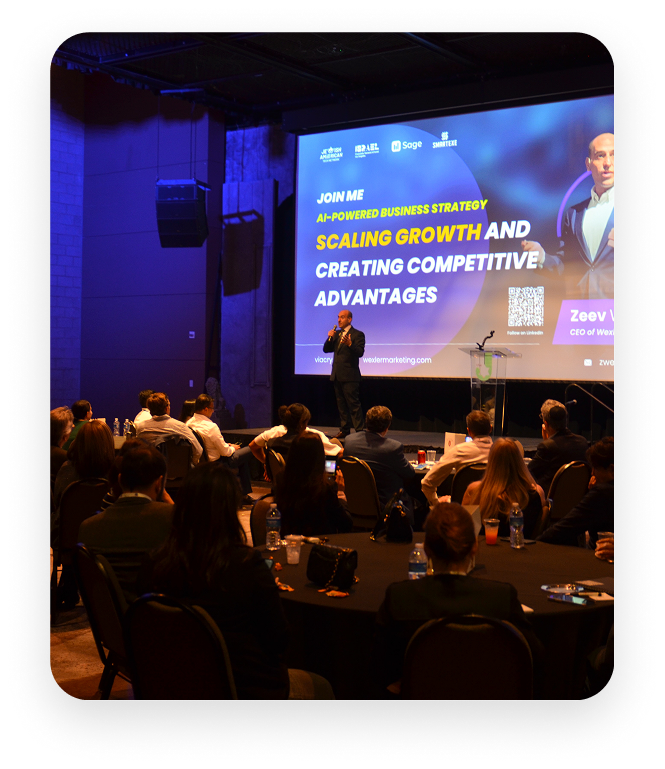
Zeev Wexler leads the design and implementation of AI workflows for manufacturing
and operations teams adopting practical AI inside existing systems. He is the
founder of Wexler Marketing, where he and his team build workflow-level AI systems
across operations, finance, and HR environments where accuracy, timing, and
accountability directly affect the business.
The work focuses on high-friction workflows where controlled AI systems can
reduce manual effort, improve review quality, and help teams make faster decisions.
The starting point is always the same: find the workflow where manual preparation
is slowing the team down, then build a controlled AI system that improves the
handoff to human review.
No. The approach works with your existing systems. AI is applied to the exports, reports, and data already moving through your operation, not introduced as a new platform.
Lorem ipsum dolor sit amet, consectetur adipiscing elit. Ut elit tellus, luctus nec ullamcorper mattis, pulvinar dapibus leo.
In 20 minutes, we identify where AI can prepare the most work and what a first build would look like.
No commitment. We will schedule a 20-minute session to identify your best starting workflow.